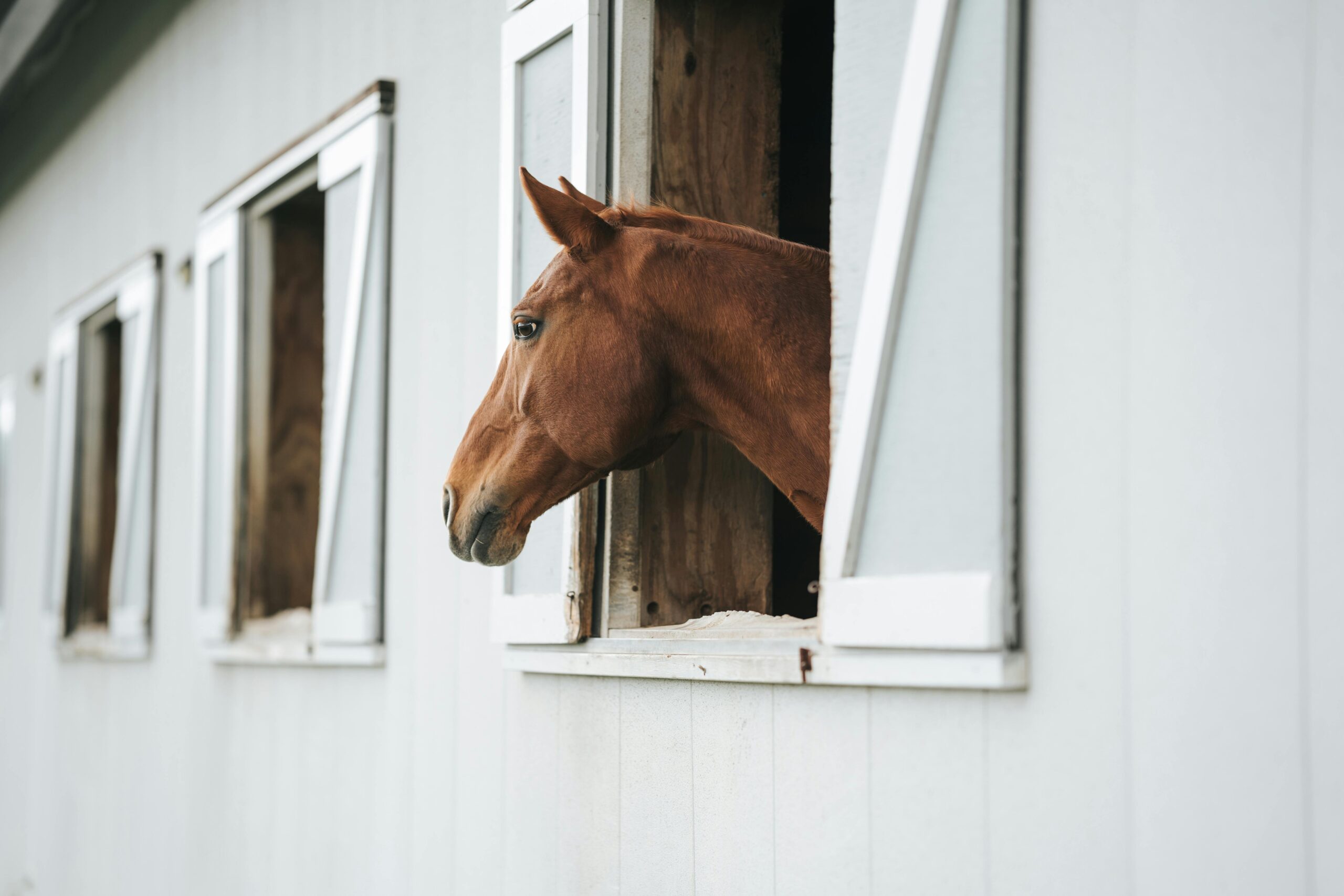
Horse Barn Spring Maintenance Checklist
While the weather is warm and horses start to graze lush spring grass, equestrian owners should now complete after-winter maintenance on their horse barns. Going through a maintenance checklist every spring sets you up for success in the coming year. From inspecting the structure to deep cleaning to restocking, giving your horse barn some upkeep in the spring increases its lifespan. Here are some important horse barn spring maintenance tasks to complete before summer begins.
Cleaning
Clean both the interior and exterior of the barn, and make sure everything is disinfected. When cleaning, keep the windows and doors open to air out the smell of cleaning supplies and ensure everything dries completely.
Clean Tack and Feed Rooms
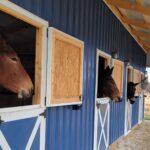
Spring is a good time to declutter and reorganize your tack and feed rooms. Our Monitor and Heritage Horse Barns come standard with a tack room for your convenience. When cleaning, get rid of any tack, supplies, and gear that you no longer use. If they’re still in good condition, you can donate them to other equestrian farms or a horse rescue. Then go through all your tools and equipment and give them a good clean, including brushes, sponges, towels, blankets, and polishing hardware. Make sure to dust and sweep the floor as well.
For the feed room, clean out any old, expired, or spilled feed, and sweep around the feed bins to prevent rodents from getting inside. Any food storage in your feed room should be pest-proof. Check the supplement buckets and throw away any that are expired. Then scrub and disinfect the water troughs and grain bins. Feed and water buckets should be cleaned and disinfected regularly to keep your horses healthy.
Clean the Stalls
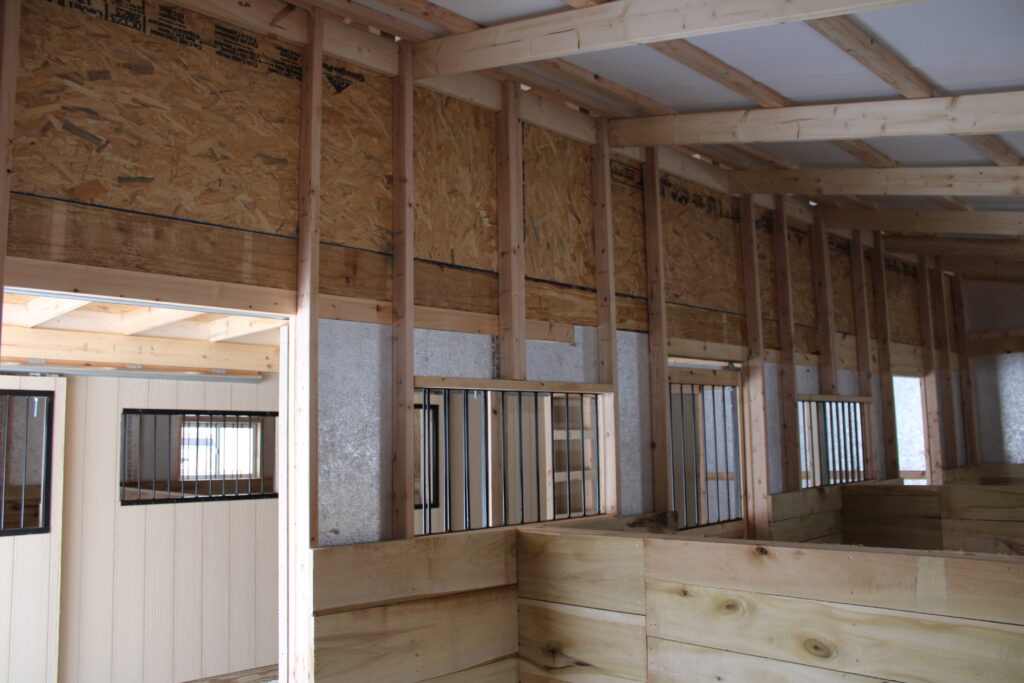
The stalls will need extra attention, as the horses will have stayed in them more during Midwestern winters. Strip the bedding from the stalls, then remove the mats to check for trapped moisture beneath. Then, dust, sweep the floor, scrub the floors and walls, and disinfect. We recommend cleaning the aisles as well. You can wash the stall doors with water and Pine Sol. Finally, replace any broken kickboards and mats, then make sure everything has fully dried before adding fresh bedding.
Hay Storage
Our Monitor Horse Barns have a second story for hay storage. In this area, first remove old, dusty, and moldy bales that may have gone bad. Then thoroughly sweep this area clean. This will ensure your horses can breathe well for good respiratory health.
Inspections
Inspect all aspects of the horse barn to ensure it is still in good condition after winter, as snow and ice can damage structures. Our barns are made to withstand harsh weather conditions, but doing routine inspections will extend their longevity. While inspecting the structure, you should also inspect safety measures like the smoke alarm and fire extinguishers just to verify that these work as well.
Structure
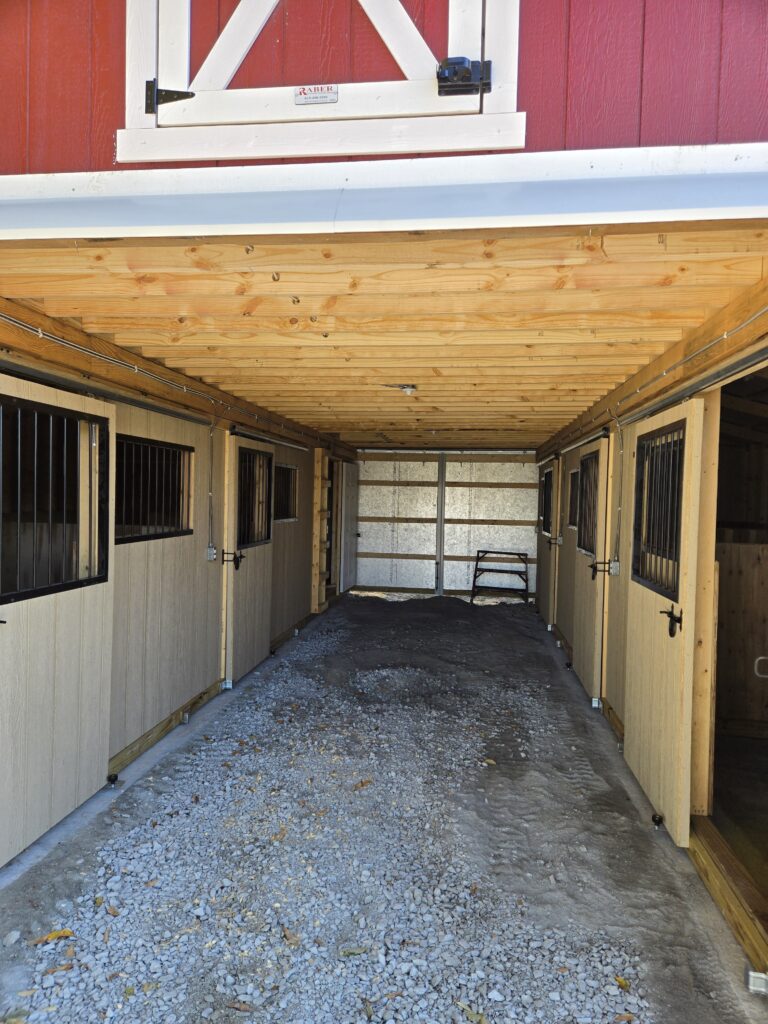
There are a few areas you’ll need to look at when inspecting your horse barn. First, inspect the roof for any damaged shingles or leaks. Then look for any damaged siding and broken windows, and inspect support beams, posts, trusses, etc, for signs of rot, warping, and cracks. You should also inspect the hardware, especially around the stalls. Check bridle hooks, nails, and halter hooks, and look for any loose bolts or screws that need tightening. Finally, make sure the doors and gates open smoothly, and lubricate hinges if needed.
Floors
Check the floors to make sure everything is still level. Inspect for rotten boards and replace any broken ones. Rubber mats in the stalls should be cleaned and replaced if old and worn down. On the floor, check for wet spots, which could indicate a leak somewhere. Pay special attention to the hay storage room so the hay doesn’t get wet and moldy.
Gutters
Check the gutters and downspouts to ensure water is draining properly. Clogged gutters will overflow, pooling water into your foundation. Water needs to flow away from the barn during rainstorms. Clean out the gutters and downspouts of any mud, sticks, and leaves to ensure they drain properly.
Air Quality
Proper ventilation is vital for your horses’ respiratory health, so ensure the air quality inside the barn is ideal. We can put gable vents into your horse barns for more ventilation. Make sure you clean the vents and louvers regularly to prevent dust buildup. Sweep out any dust, dirt, and cobwebs to keep the air fresh and prevent fire hazards. Additionally, make sure any fans you use in the barn work properly before the weather gets warmer in the Midwest.
Repairs
After inspecting the barn, make any necessary repairs you see that need to be done. Replace any old or broken equipment, damaged shingles, and warped boards. Then, repair any holes in the siding with caulk to prevent moisture and pests from getting inside. The materials we use for our horse barns are very durable, but inspecting and repairing them once a year extends the structure’s lifespan.
Get a Horse Barn with Raber
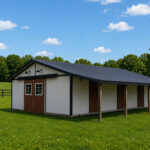
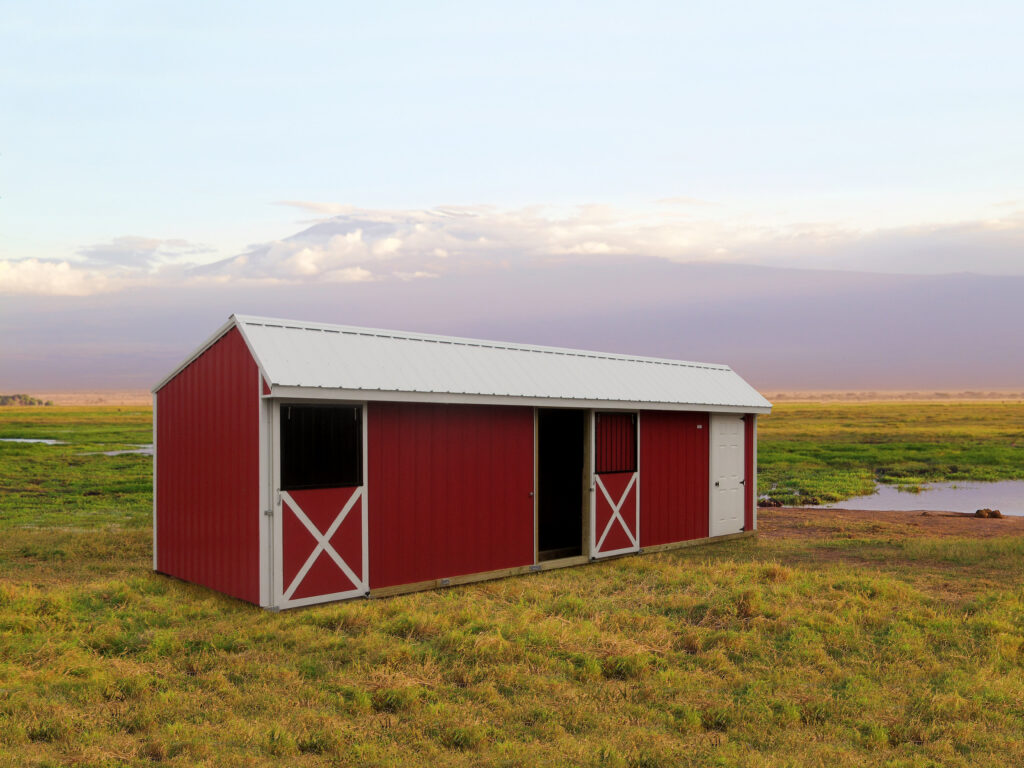
From small equine farms to large ones, Raber Storage Barns has the perfect horse barn style for you. Our horse barns are designed to give proper shelter for your livestock, protecting them from weather and predators. Your animals will be safe and secure inside our barns, and the durable materials will ensure they last for decades. Check out our in-stock inventory to see what’s available on our various lots. If you want a custom horse barn, design one with our 3D Builder. Contact us today to get started.